GODBOD manual / Drop 001 / GDBD-FM1

The Textured Foam Roller Manual

Thirteen recovery techniques, pressure-zone selection, quick routines, safety notes, care, and a PDF-ready quick-reference sheet for the GODBOD GDBD-FM1 roller.
Edition 001 13 techniques PDF ready 13 x 5.5 in
Shop the roller
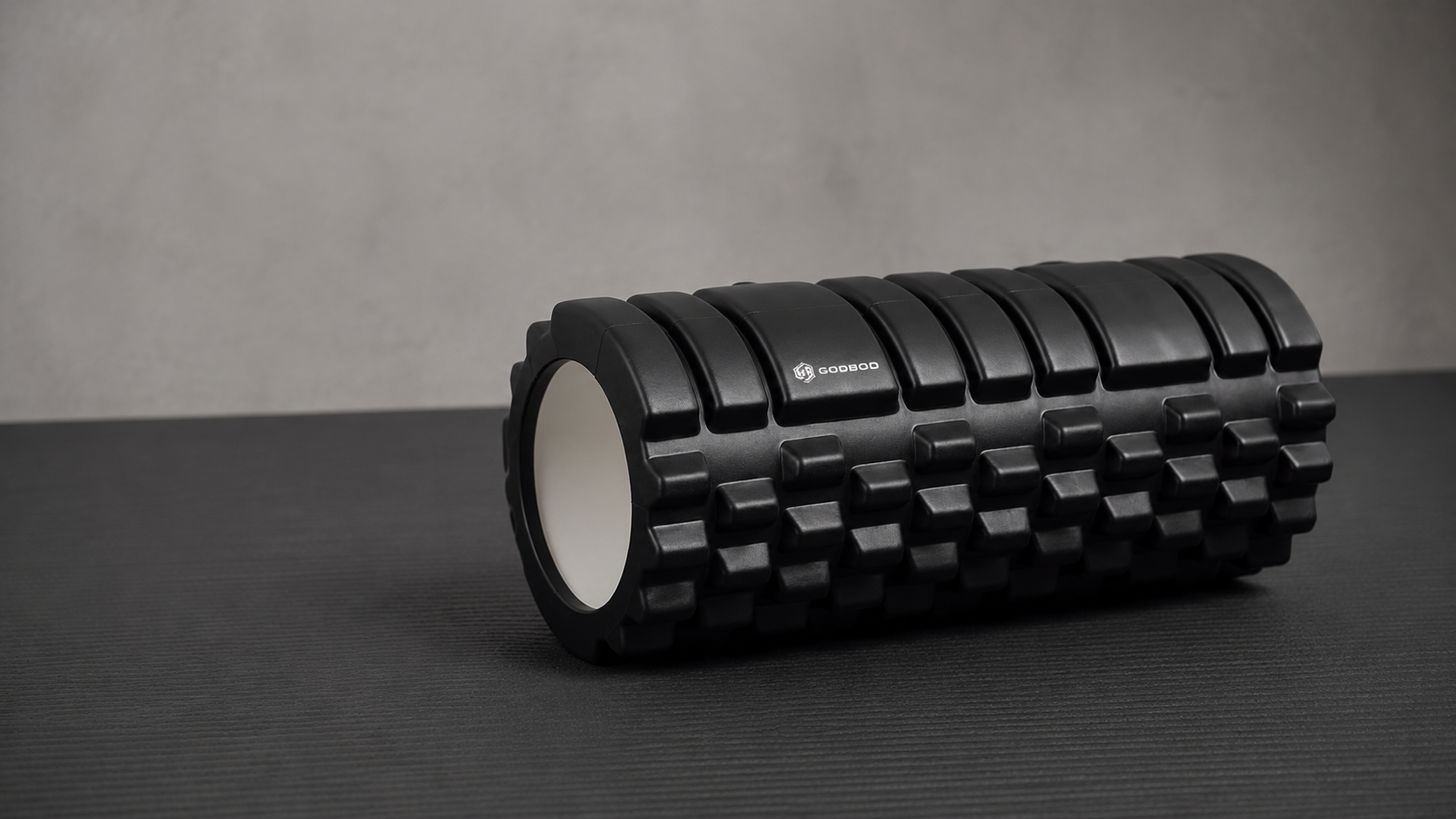
GODBOD GDBD-FM1 foam roller guide cover image
GDBD-FM1 Textured hollow-core roller

01 / Contents

Use this manual like a field checklist.

02 / Welcome

Recovery is part of the work.

The GDBD-FM1 is a compact textured roller for warm-ups, cooldowns, and daily mobility resets. This manual is built to help you choose the right pressure zone, set up safely, and repeat short routines without guessing.

Start light. Roll slowly. Keep breathing. If a position feels sharp, numb, unstable, or wrong, stop and change the setup.

Best first session

Pick two lower-body areas and one upper-back area. Spend 20 to 45 seconds per area, then walk around and reassess.

03 / Before you roll

Useful pressure only. Sharp pain is not the goal.

Stop

Stop immediately

Stop if you feel sharp pain, numbness, tingling, dizziness, joint pain, shortness of breath, or symptoms that feel wrong.

Avoid

Do not roll these areas

Avoid direct pressure on joints, bones, the neck, the low spine, wounds, rashes, bruising, swelling, and recent surgical areas.

Ask first

Get professional guidance

Ask a qualified healthcare professional before use if you are injured, pregnant, recently had surgery, or have a medical condition.

04 / Frequently asked questions

Simple answers before the technique pages.

What is foam rolling for?

Foam rolling is a self-massage habit used to apply controlled pressure to soft tissue before training, after training, or after long periods of sitting.

When should I roll?

Use lighter passes before training and slower, calmer passes after training. On rest days, keep sessions short and focused.

How long should each area take?

Start with 20 to 45 seconds per area or about 8 to 10 slow passes. Pause gently for a few breaths if a spot feels useful.

Should rolling hurt?

It can feel uncomfortable, but it should stay manageable. Reduce pressure if you tense up or hold your breath.

How do I make it easier?

Use your hands and opposite leg to unload body weight, choose broad pads, and shorten the session.

How do I make it stronger?

Change body angle first. Add pressure slowly. Use edge blocks or focus nubs only when pressure feels useful.

05 / Roller anatomy
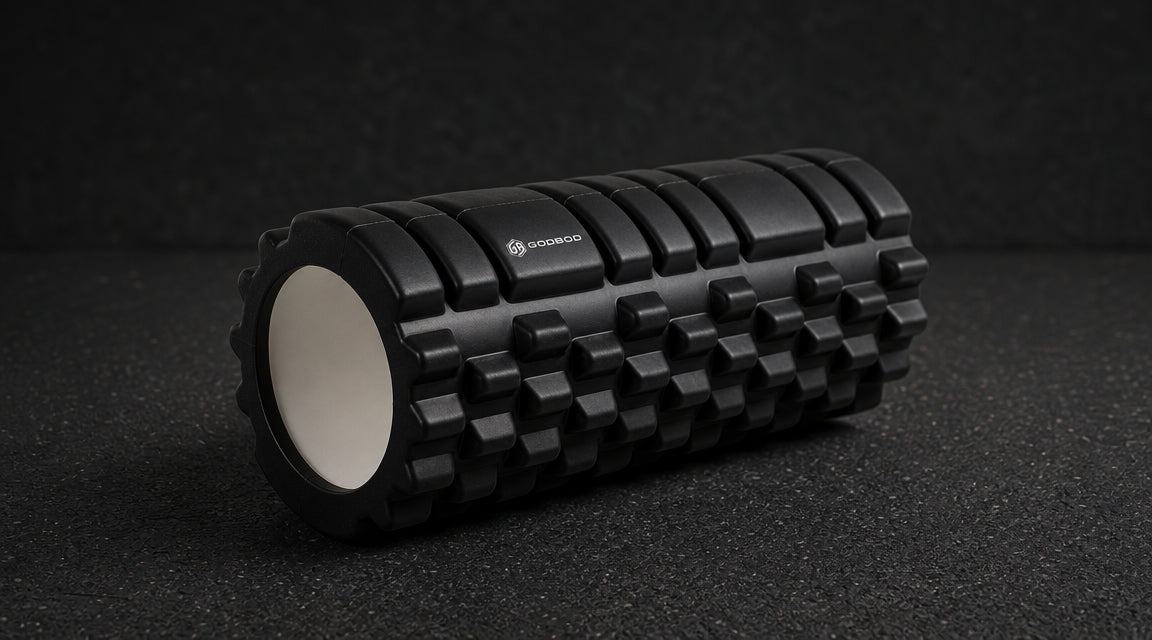
Three pressure zones. One compact tool.

GODBOD foam roller showing the raised tread zones A B C D
A / Palm pads
Broad raised pads for steadier contact over larger areas like quads, hamstrings, glutes, and upper back.
B / Edge blocks
Raised rectangular blocks for a firmer pressure line without switching tools.
C / Focus nubs
Dense square side tread for shorter targeted passes on areas you can tolerate comfortably.
D / Hollow core
Firm hollow-core build with a thick outer rim for compact support and daily repeat use.

06 / Quick routines

Pick the ritual that matches the day.

6 minutes

Pre-training primer

  1. Calves: 30 seconds each side.
  2. Quads: 30 seconds each side.
  3. Glutes: 30 seconds each side.
  4. Upper back: 60 seconds total.
  5. Stand, walk, and test how you feel before loading up.
8 minutes

Post-training cooldown

  1. Hamstrings: 45 seconds each side.
  2. Quads: 45 seconds each side.
  3. Calves: 45 seconds each side.
  4. Lats: 45 seconds each side.
  5. Finish with easy breathing and light walking.
5 minutes

Desk reset

  1. Upper back only: 60 seconds. Avoid the neck and low spine.
  2. Glutes: 45 seconds each side.
  3. Calves: 45 seconds each side.
  4. Finish with two minutes of easy movement.

07-19 / Technique index

Thirteen useful places to start.

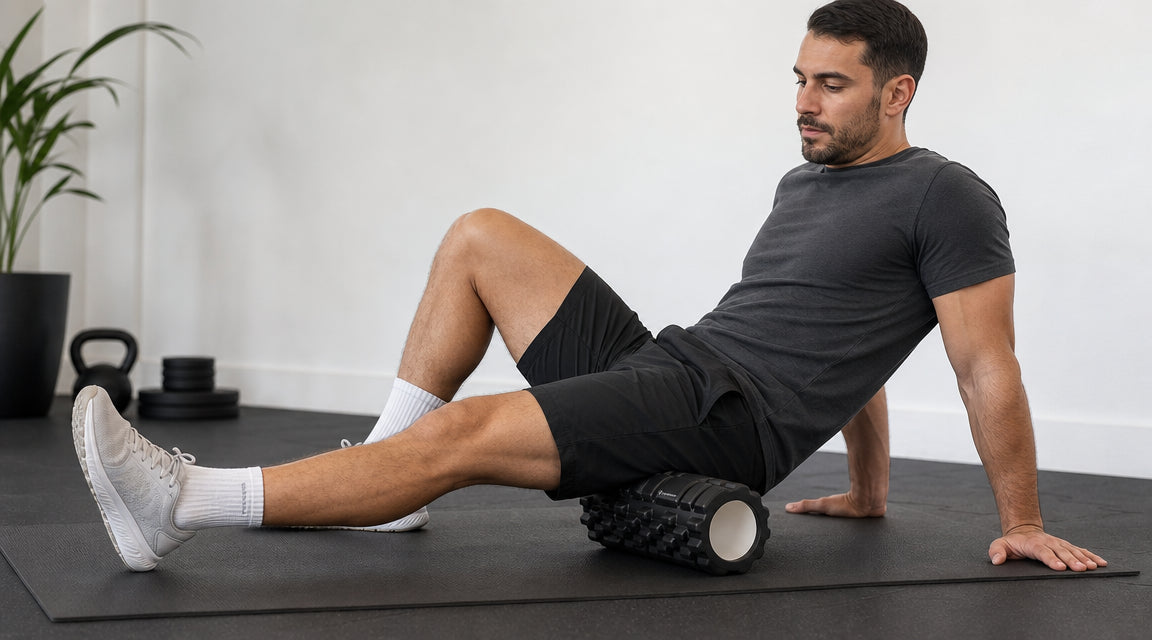
Hamstrings foam rolling posture

07 / Hamstrings

Back of thigh

Target: hamstrings between the knee and glute.

  1. Sit with one thigh on the roller and hands behind you.
  2. Keep the opposite foot planted to control pressure.
  3. Roll from above the knee toward the glute.
  4. Pause only on useful tension, then keep moving.
  5. Use 20 to 45 seconds per side.

Avoid: rolling directly behind the knee or forcing pain.
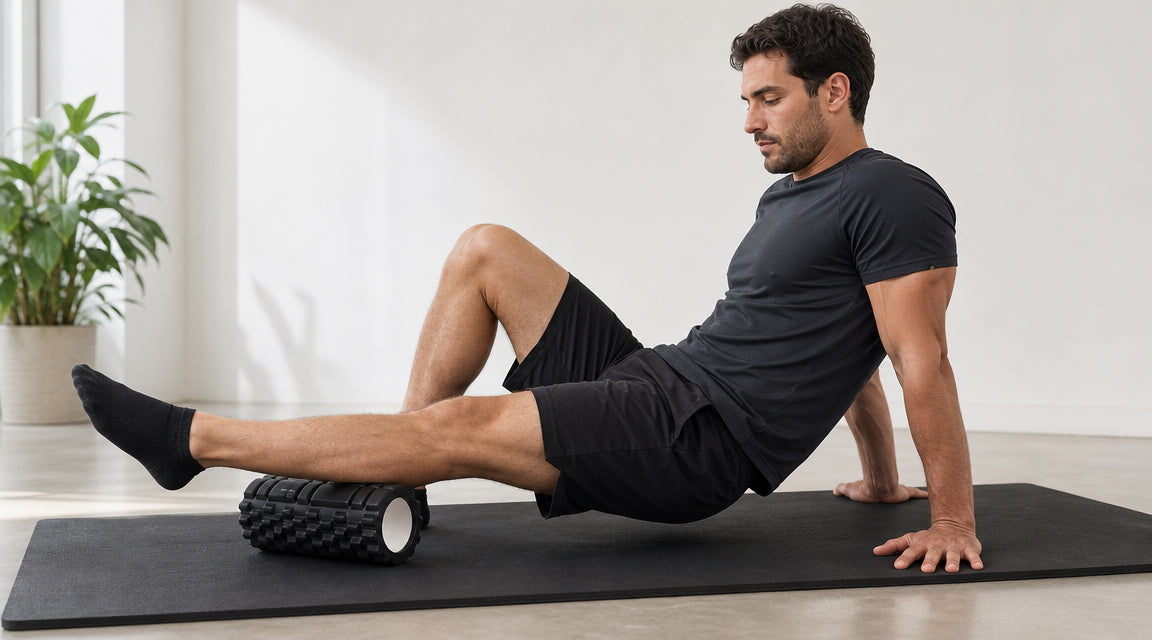
Calves foam rolling posture

08 / Calves

Lower leg

Target: calf tissue between ankle and knee.

  1. Place one calf on the roller.
  2. Support yourself with your hands.
  3. Use the opposite foot to unload pressure.
  4. Move from above the ankle toward below the knee.
  5. Rotate slightly to find useful tension.

Avoid: direct pressure on the ankle, knee, or Achilles tendon.
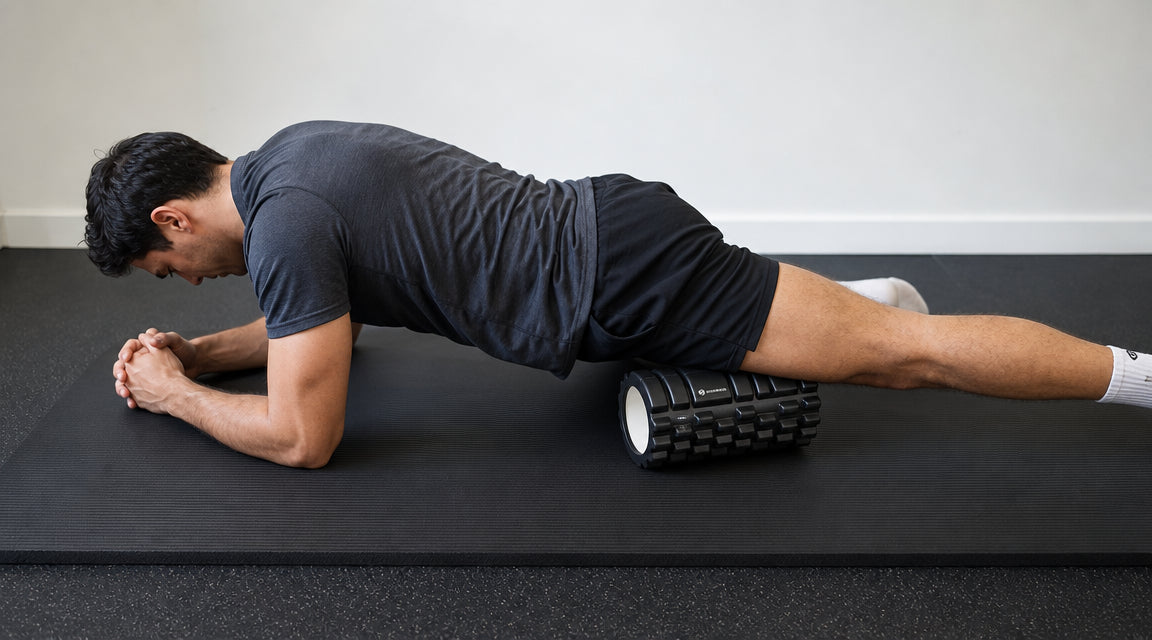
Quads foam rolling posture

09 / Quads

Front of thigh

Target: front thigh between hip and kneecap.

  1. Start face down on forearms.
  2. Place the roller under one or both thighs.
  3. Keep your core braced and movement slow.
  4. Roll from below the hip toward above the knee.
  5. Shift slightly side to side if pressure is manageable.

Avoid: rolling directly over the kneecap or arching the low back.
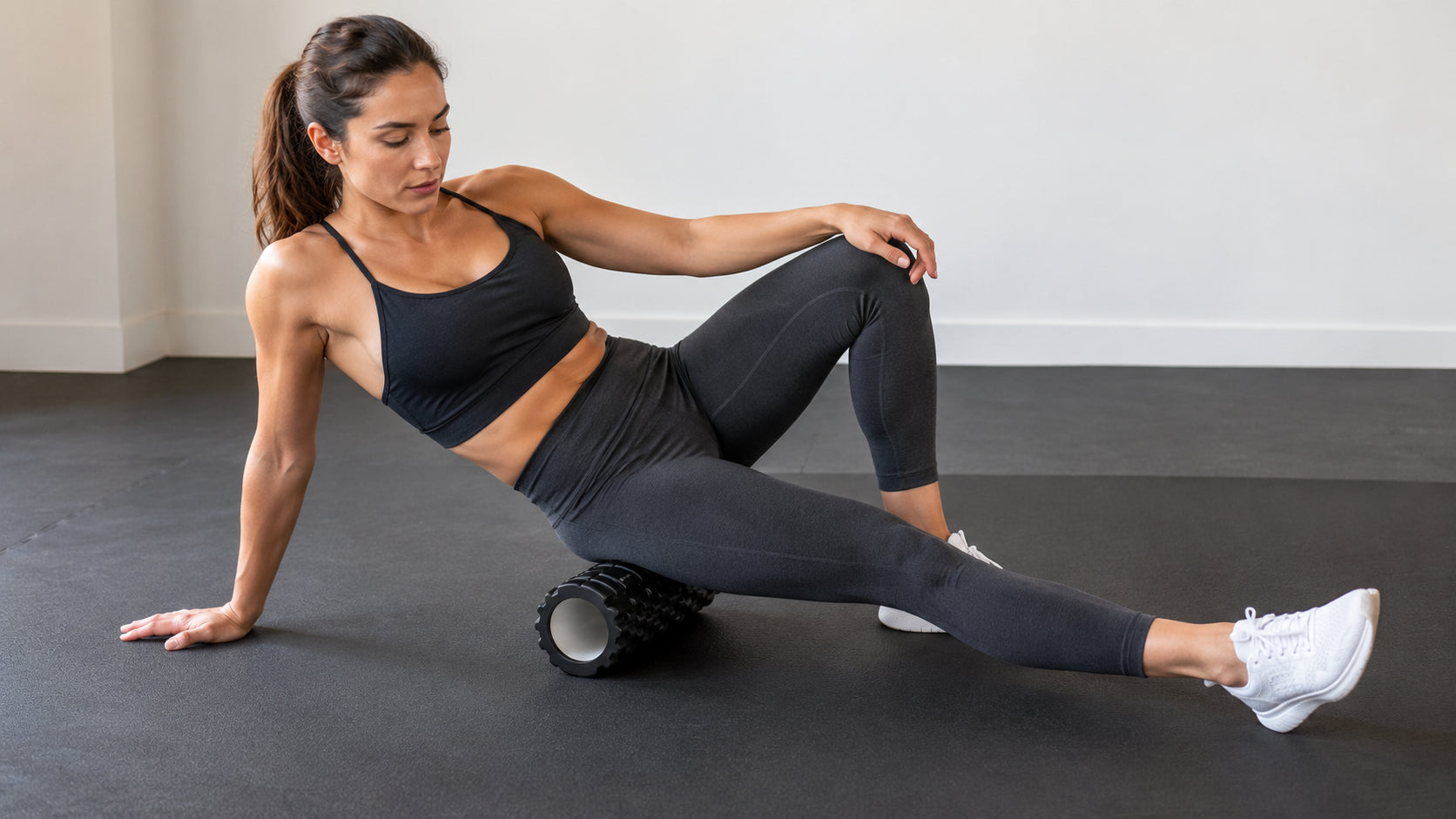
Glutes foam rolling posture

10 / Glutes

Hip and seat

Target: glute tissue around the side/back of the hip.

  1. Sit on the roller and shift to one side.
  2. Plant the opposite foot for control.
  3. Use your hands to reduce body weight.
  4. Move in short passes across the glute.
  5. Keep the pressure useful, not sharp.

Avoid: direct pressure on the tailbone or hip joint.
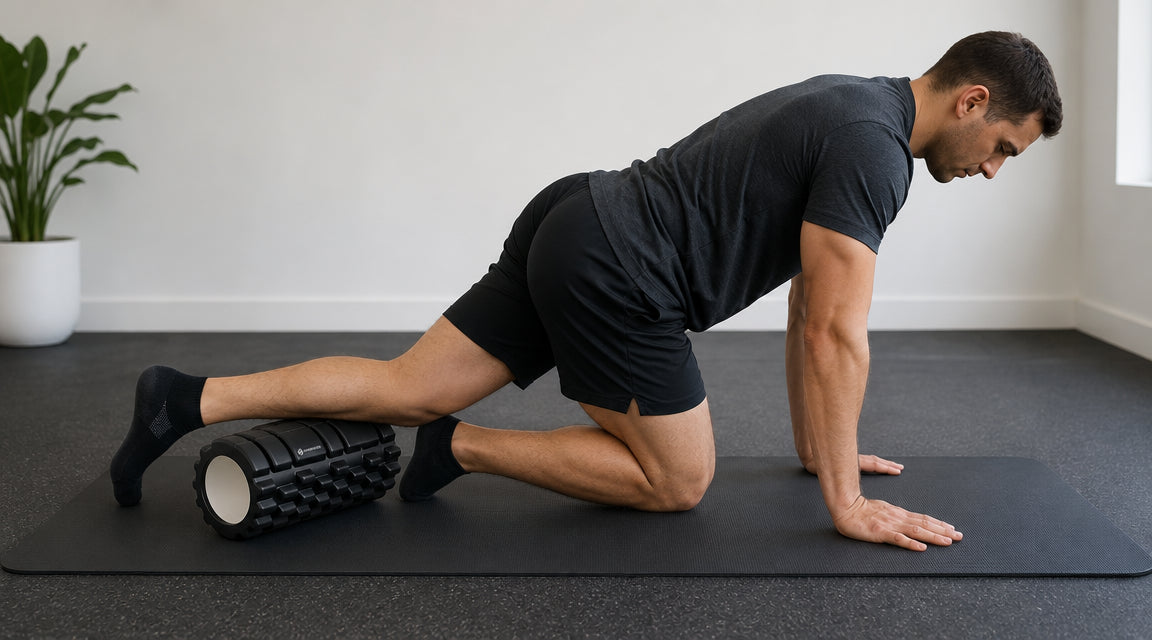
Shins foam rolling posture

11 / Shins

Front outside lower leg

Target: soft tissue along the front outside of the lower leg.

  1. Start on hands and knees.
  2. Place the roller under the outside front of one lower leg.
  3. Keep pressure very light.
  4. Move in short, controlled passes.
  5. Stop if the pressure feels sharp or bony.

Avoid: rolling directly on the shin bone.
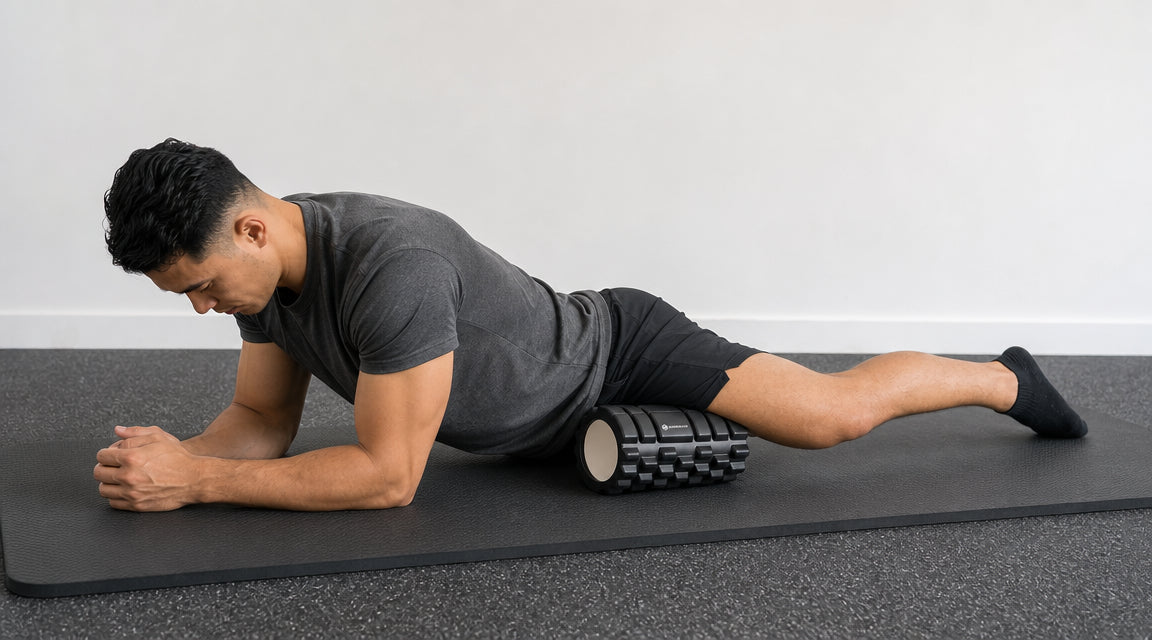
Adductors foam rolling posture

12 / Adductors

Inner thigh

Target: inner thigh between groin and knee.

  1. Lie face down with one leg bent out to the side.
  2. Place the roller under the inner thigh.
  3. Brace with forearms and hands.
  4. Move slowly through a small range.
  5. Keep pressure controlled and light at first.

Avoid: rolling directly on the groin or knee joint.
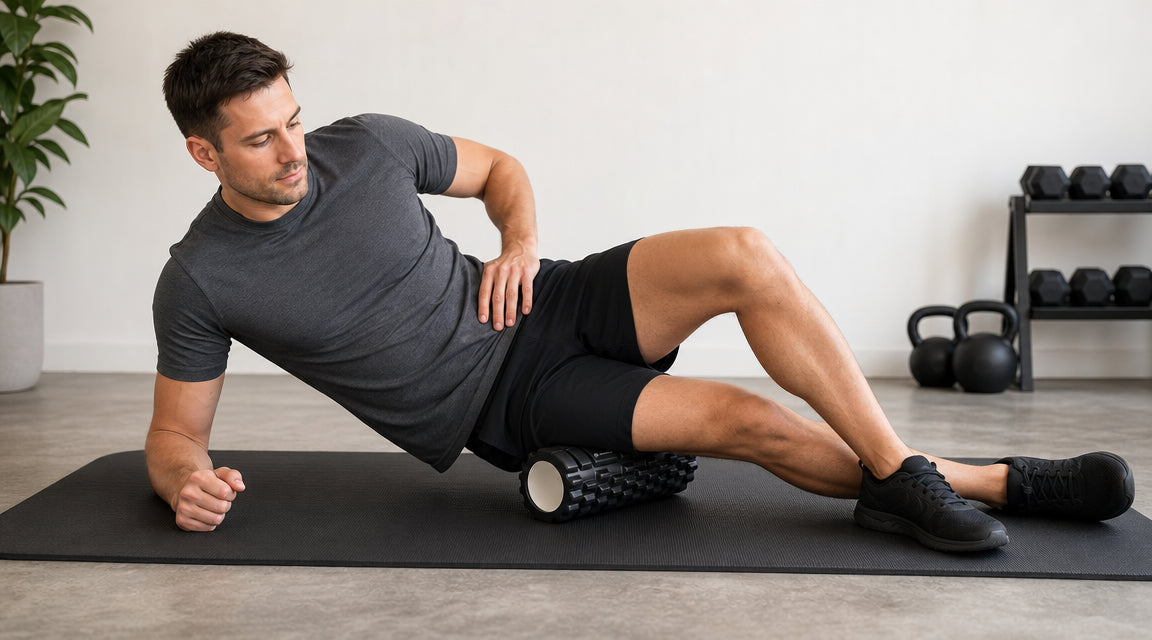
IT band area foam rolling posture

13 / IT band area

Outer thigh

Target: outer thigh area with reduced pressure.

  1. Lie on your side with the roller under the outer thigh.
  2. Cross the top leg in front and plant the foot.
  3. Use hands and top foot to unload pressure.
  4. Move in short passes, not aggressive long rolls.
  5. Keep breathing normal.

Avoid: forcing high pressure through the outside knee or hip.
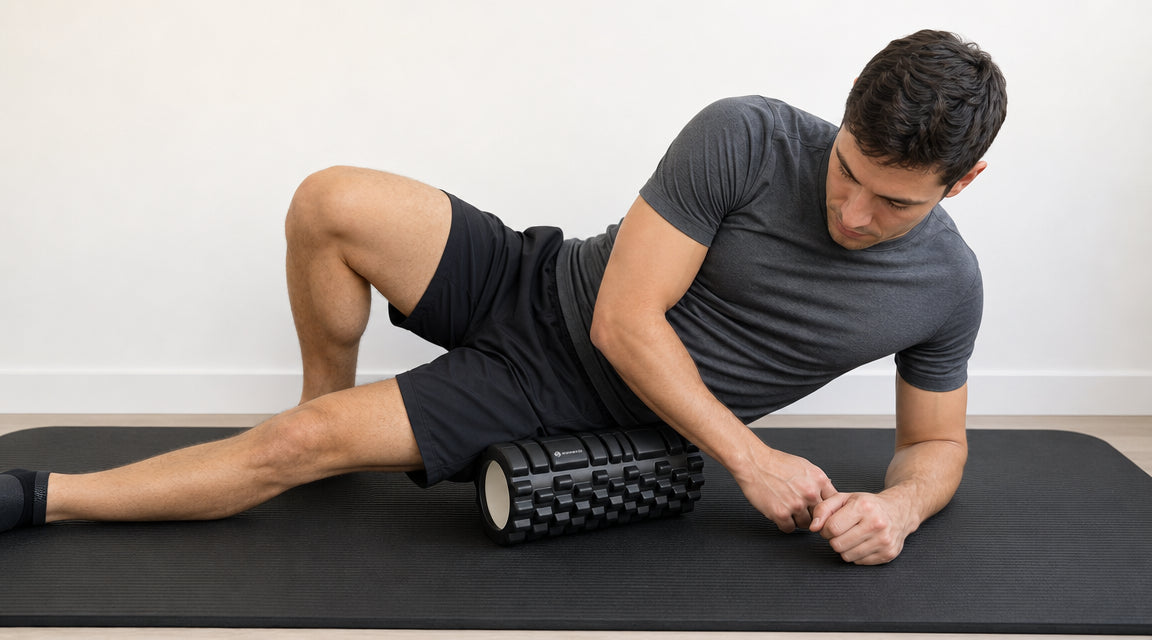
TFL foam rolling posture

14 / TFL

Front outside hip

Target: front outside hip area.

  1. Start similar to the quad setup.
  2. Rotate slightly outward toward the front outside hip.
  3. Support with forearms and opposite leg.
  4. Use small passes near the hip crease.
  5. Keep pressure mild and controlled.

Avoid: direct pressure on the hip bone.
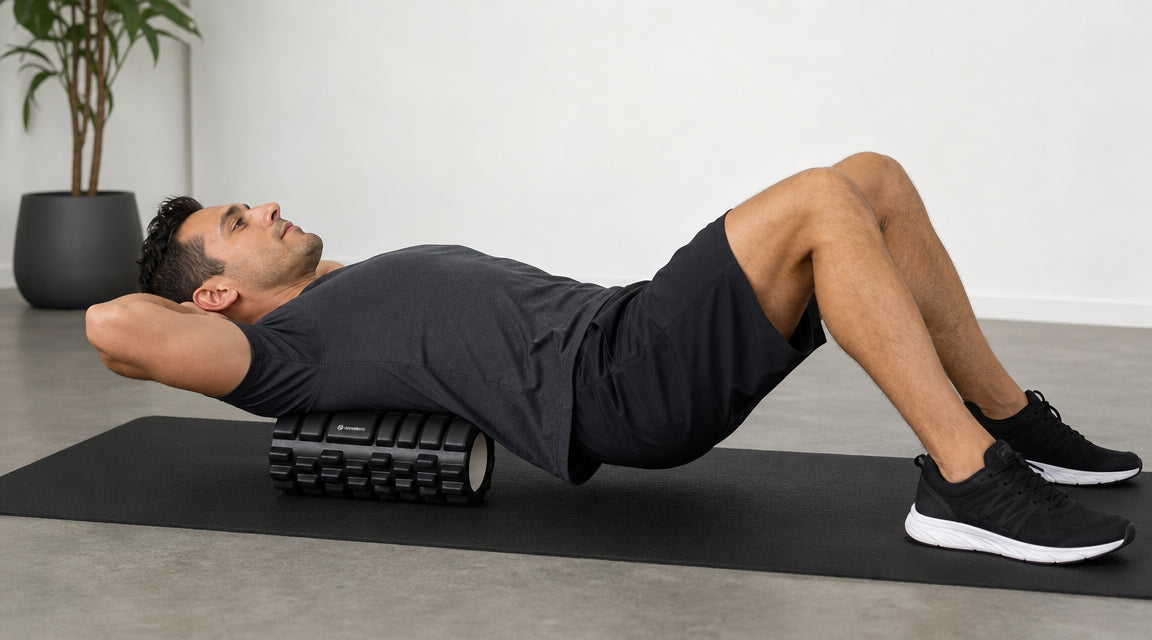
Upper back foam rolling posture

15 / Upper back

Shoulder blade area

Target: upper thoracic back below the neck.

  1. Lie face up with knees bent and feet planted.
  2. Place the roller below the shoulder blades.
  3. Support your head lightly.
  4. Lift hips slightly and move in small passes.
  5. Stay between upper and mid-back.

Avoid: rolling the neck or low spine.
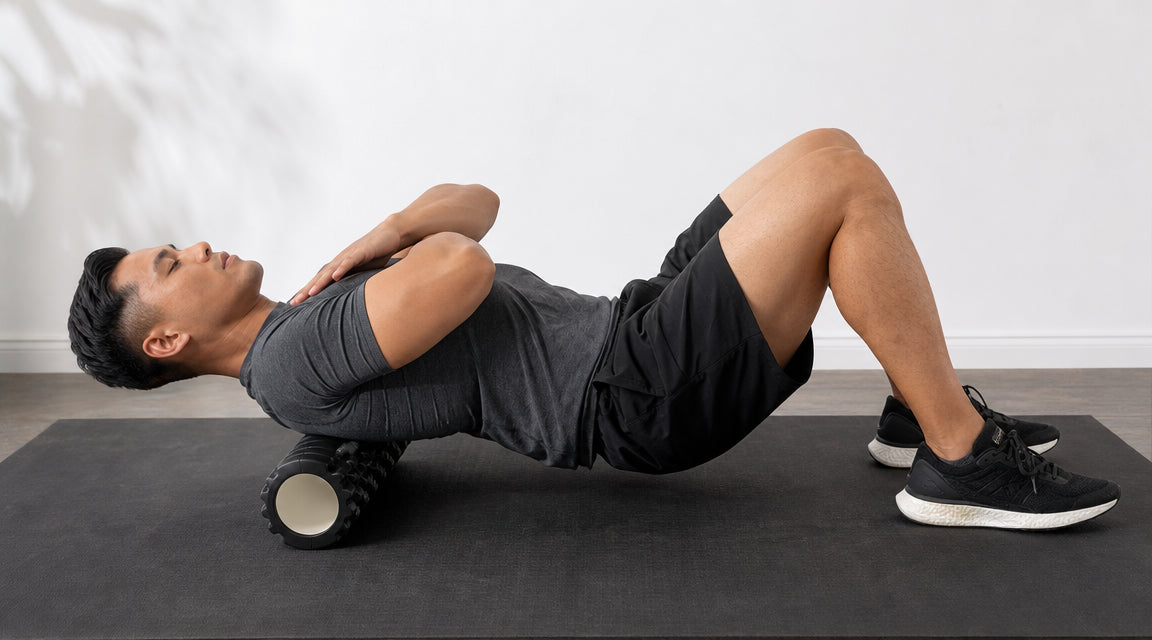
Mid-back foam rolling posture

16 / Mid-back

Thoracic area

Target: mid thoracic back.

  1. Lie face up with the roller under the mid-back.
  2. Cross arms or hug yourself to open shoulder blades.
  3. Keep feet planted and hips lightly lifted.
  4. Move slowly in short passes.
  5. Keep ribs and breathing relaxed.

Avoid: rolling into the low back.

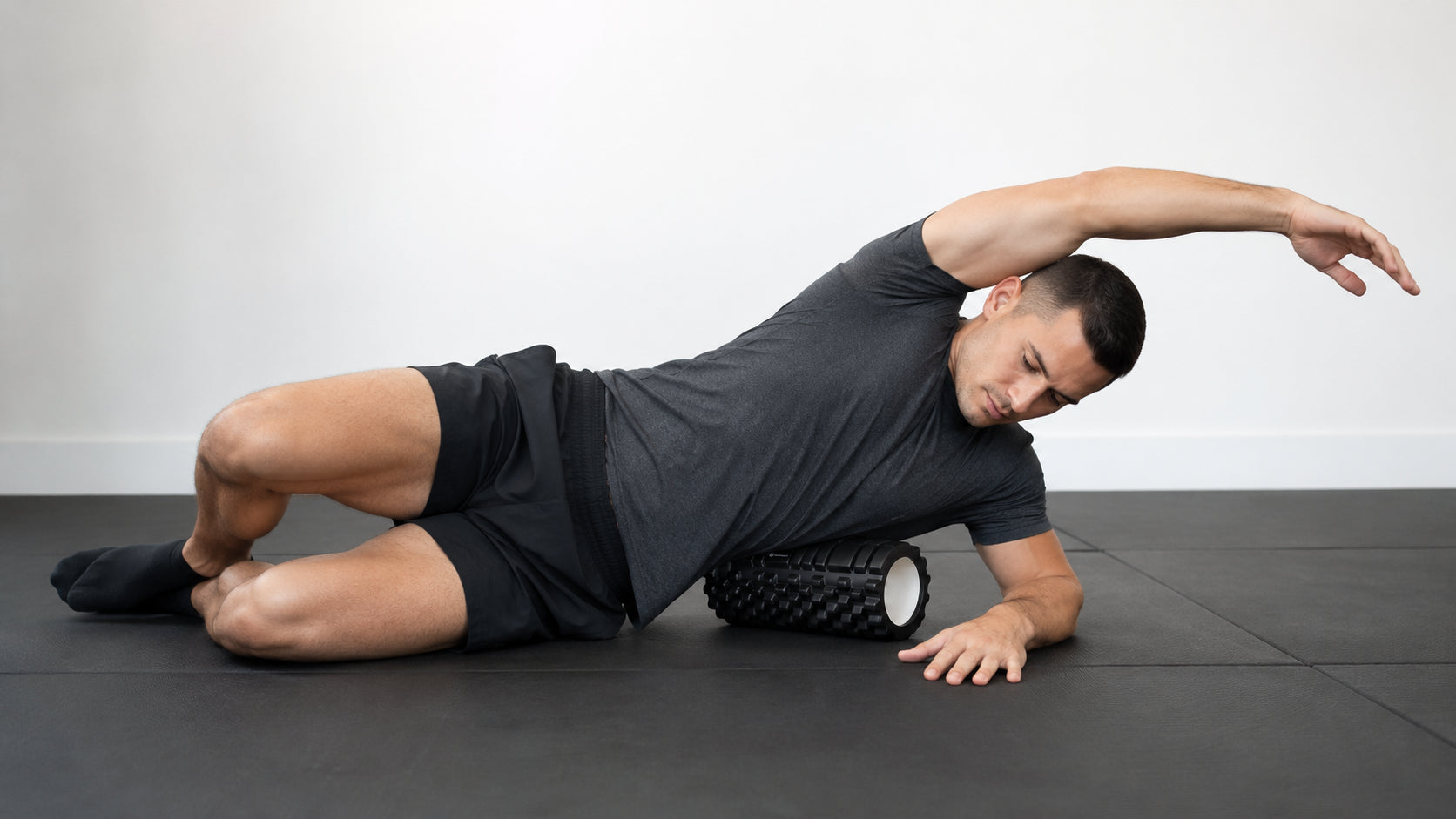
Lats foam rolling posture

17 / Lats

Side body

Target: outside rib area below the armpit.

  1. Lie on your side with the roller below the armpit.
  2. Reach the top arm overhead if comfortable.
  3. Use the legs to control pressure.
  4. Move slowly along the side body.
  5. Keep pressure away from the ribs if it feels sharp.

Avoid: forcing pressure into the armpit or rib cage.
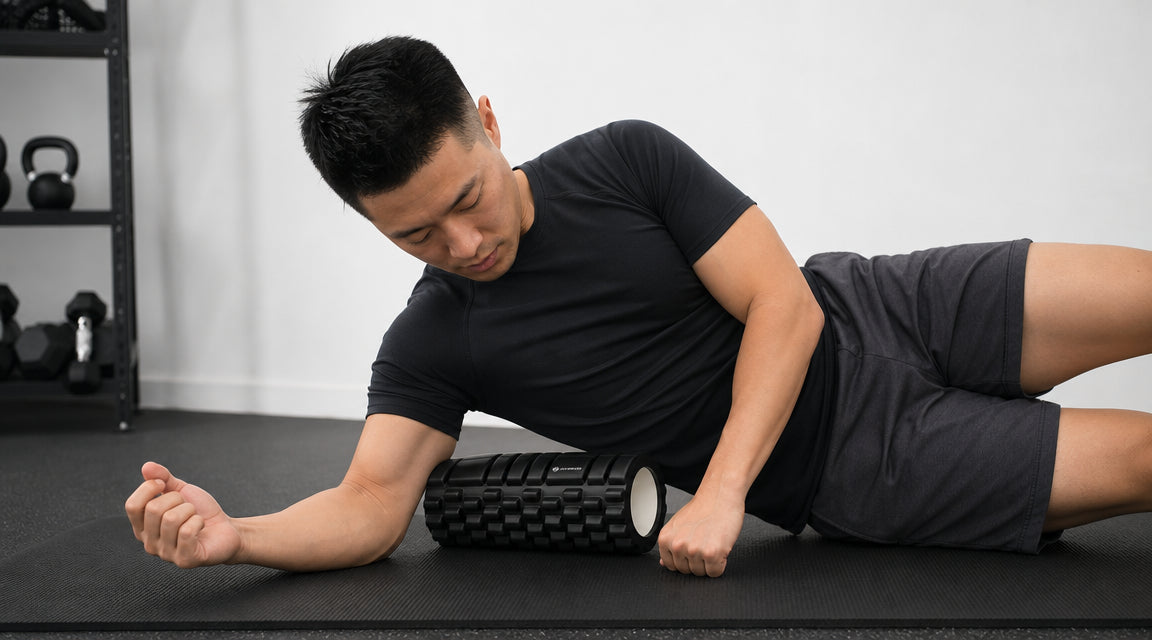
Biceps foam rolling posture

18 / Biceps

Upper arm front

Target: upper arm biceps area with very light pressure.

  1. Lie on your side with one arm extended.
  2. Place the roller under the upper arm.
  3. Keep the shoulder relaxed and supported.
  4. Use tiny passes rather than heavy pressure.
  5. Stop if you feel nerve-like symptoms.

Avoid: heavy pressure near the elbow or shoulder joint.
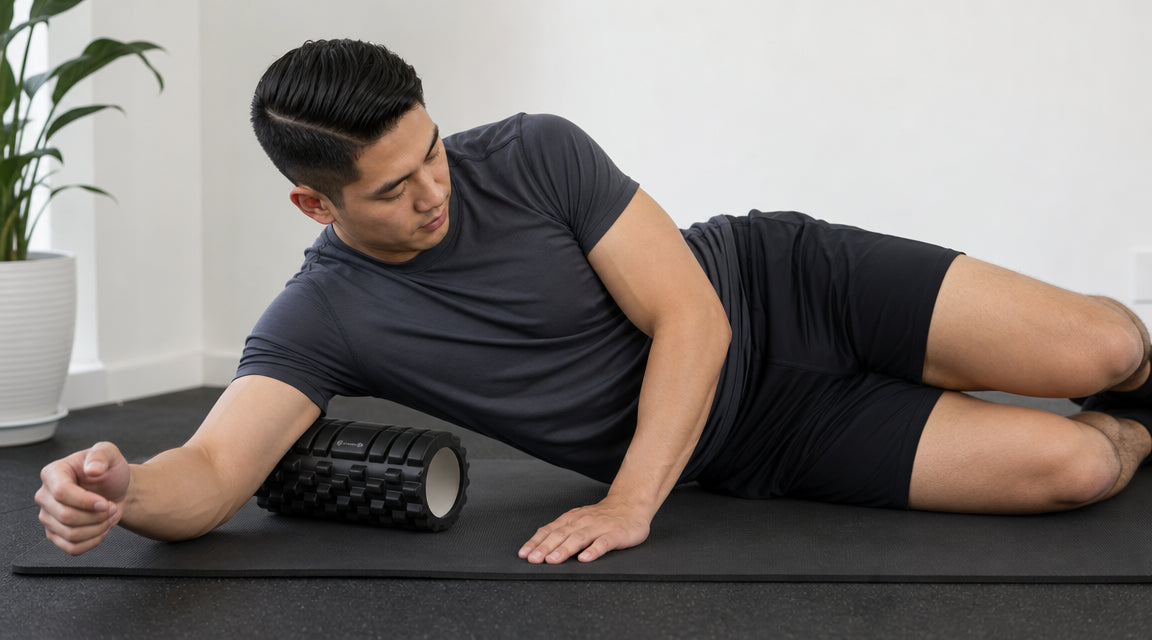
Triceps foam rolling posture

19 / Triceps

Upper arm back

Target: back of the upper arm.

  1. Lie on your side with the roller under the triceps.
  2. Keep the elbow relaxed.
  3. Use the opposite hand and torso to control load.
  4. Move between the elbow area and back of shoulder.
  5. Use light pressure only.

Avoid: direct pressure on the elbow or shoulder joint.

20 / Quick reference sheet

One screen for repeat use.

Lower body

Hamstrings, calves, quads, glutes, shins, adductors, IT band area, TFL.

Upper body

Upper back, mid-back, lats, biceps, triceps.

Default dose

20 to 45 seconds per area or about 8 to 10 slow passes. Keep breathing steady.

Pressure rule

Hands and opposite leg reduce load. Crossed legs and sharper tread zones increase load.

Stop signs

Sharp pain, numbness, tingling, dizziness, shortness of breath, joint pain, or symptoms that feel wrong.

Best habit

Pick one short routine and repeat it consistently before adding more drills.

21 / Care and progression

Keep it simple enough to repeat.

Care

Wipe and dry

Wipe the roller after use and let it dry before storage. Avoid sharp objects and high heat.

Progression

Add pressure slowly

Start with broad zones and shorter sessions. Use edge blocks or focus nubs only when the pressure feels useful.

Rule

Useful discomfort only

Mild discomfort can be normal. Sharp pain is not a goal. Stop and reassess.

22 / Keep building

Build the recovery system around repeat use.

Use this guide as a starting point. Keep sessions short, repeat the routines that help, and come back to the technique pages when training demands change.

GODBOD GDBD-FM1

Textured hollow-core foam roller for warm-ups, cooldowns, and daily mobility breaks.

Keep it simple

Use useful pressure, breathe normally, avoid joints and bones, and stop if symptoms feel sharp or wrong.

Need help?

Visit trygodbod.com for product details, support, and the latest guide updates.